SEO Strategy
How Many Backlinks Do You Actually Need to Rank?
Keir
August 25, 2026 · 6 min read
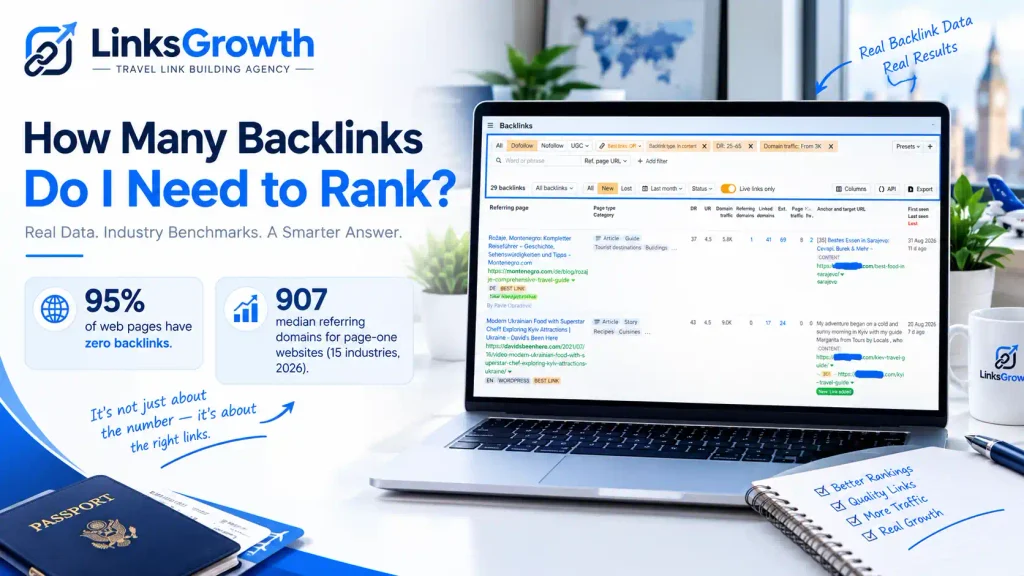

Here’s a statistic worth sitting with: an estimated 95% of all pages on the web have zero backlinks. Yet websites ranking on page one of Google, across 15 industries studied in 2026, have a median of 907 referring domains. That gap — between “most pages have none” and “page-one pages have hundreds” is exactly why “how many backlinks do I need to rank” is one of the most searched questions in SEO, and one of the most consistently misunderstood.
The honest, if unsatisfying, answer is that there’s no universal number. But that doesn’t mean the question is unanswerable — it means it’s the wrong question in its current form. This guide walks through what Google itself has said about backlink count, what large-scale studies from 2025 and 2026 actually show, real industry benchmarks, and a practical framework for working out the number that matters for your specific keyword, niche, and competition.
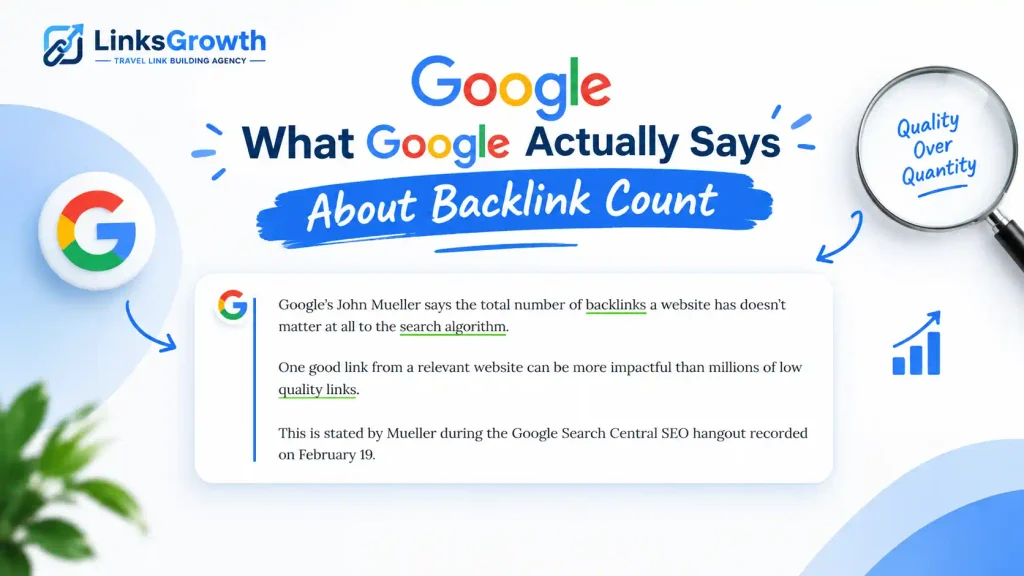
Start with the source. In a Google Search Central hangout, John Mueller was asked directly whether the total number of backlinks or the number of unique referring domains matters more. His answer left little room for interpretation: the total number is, in his words, essentially “completely irrelevant” to Google’s ranking systems. Mueller explained that Google doesn’t count links the way SEO tools do a single link from a genuinely relevant, authoritative source (his example was a major news site’s homepage) can signal more to Google than thousands of low-quality links combined.
This isn’t a one-off comment. Google’s own guidance on link spam and its published explanations of how PageRank works consistently return to the same principle: links function as a relevance and trust signal evaluated by quality and context, not tallied as a raw score. Gary Illyes, another long-standing Google Search Advocate, has separately noted that natural backlinks primarily help with discovery and trust telling Google’s systems a page exists and is worth crawling and trusting – rather than functioning as a scoreboard where more automatically beats fewer.
So why does “how many backlinks do I need” remain such a persistently useful question, if Google itself downplays raw count? Because in practice, ranking on a competitive page one still correlates strongly with having a substantial number of referring domains not because the count itself is the ranking factor, but because accumulating that many genuinely relevant, trusted links is difficult to do without also building the authority, content quality, and relevance signals Google actually rewards. The number is a symptom of doing many other things right, not a target to hit in isolation.
Theory aside, here’s what large-scale analysis reveals about the relationship between backlinks and rankings.
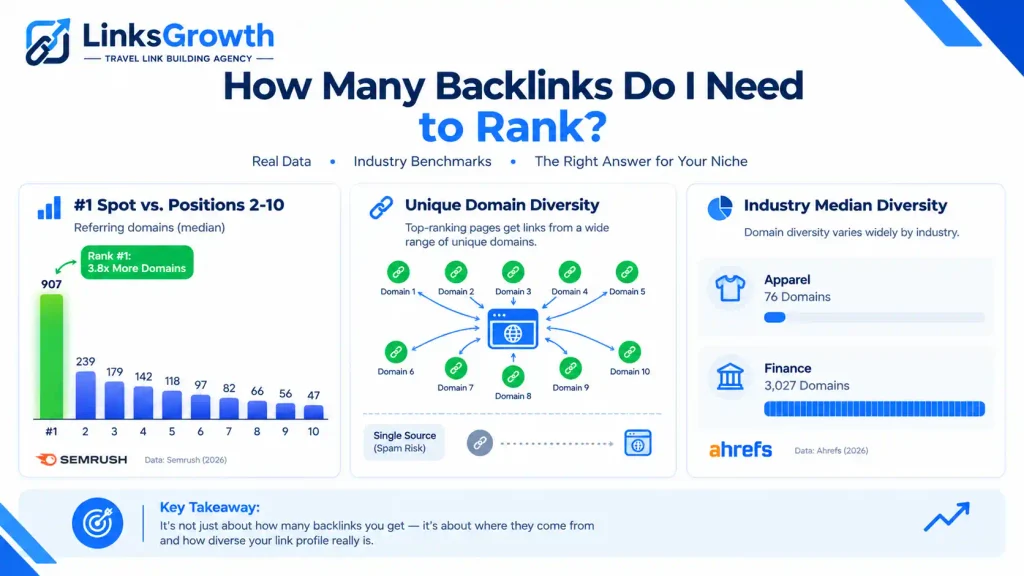
Position correlates strongly with backlink volume, at the top of the results. A large-scale analysis of 11.8 million Google search results, published by Backlinko in April 2025, found that the #1 ranking result had, on average, 3.8 times more backlinks than results in positions 2 through 10 combined. That’s a striking gap, it suggests the very top spot behaves differently from the rest of page one, where the backlink advantage flattens out considerably.
Referring domains matter more than raw backlink count. Separate research analyzing roughly one million US search results found that the number of unique referring domains correlated slightly more strongly with rankings than the total number of backlinks. This lines up with Mueller’s guidance: ten links from ten different genuinely relevant sites tend to carry more weight than fifty links from a single site, because domain diversity is itself a trust signal Google’s systems weigh.
The number needed varies enormously by industry. A 2026 study analyzing 1,462 domains across 15 industries found that page-one websites have a median of 907 referring domains but the range beneath that median figure is enormous. Apparel and fashion sites needed a median of just 76 referring domains to rank on page one. Finance and Insurance, one of the most competitive verticals in all of SEO, required a median of 3,027 roughly 40 times more. Legal, healthcare, and other high-stakes commercial niches cluster toward the higher end of that range, while informational, hobbyist, and niche B2B sites tend to need dramatically fewer.
Link quality has a measurable multiplier effect. Analysis of domain rating and link value suggests a single link from a genuinely high-authority domain (roughly DR70+) can carry the equivalent ranking value of around a dozen links from weaker, DR20-30 domains. This is a big part of why two competitors with similar total backlink counts can see very different ranking outcomes, the composition of that link profile matters as much as its size.
Link velocity — the rate of new referring domains gained per month also varies by industry, with some sectors seeing established competitors add new referring domains at a pace of 15 to over 100 per month. A site building links slower than its competitors’ velocity can find itself losing ground even while its own backlink count technically grows.
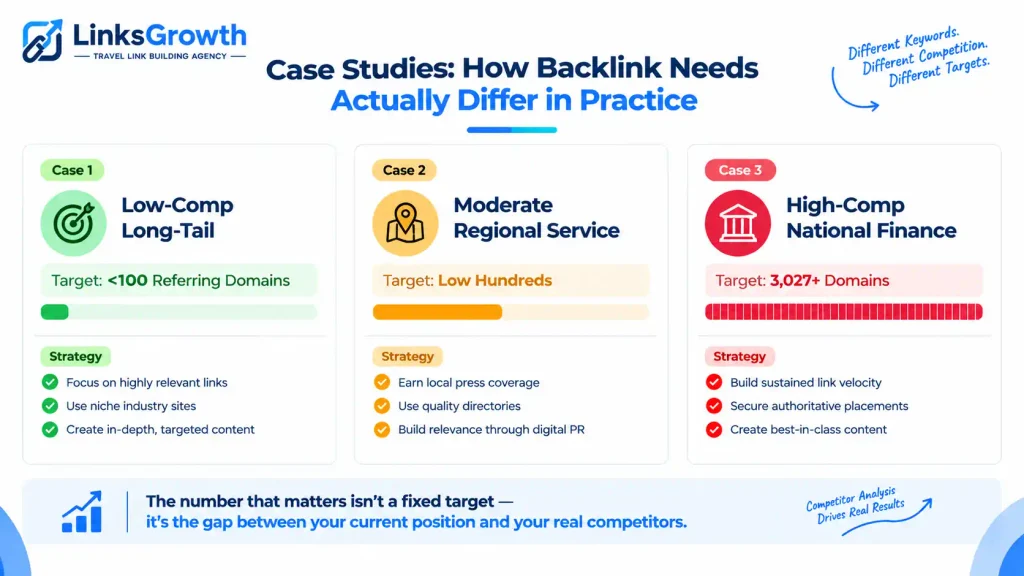
Numbers in the abstract are easy to misread. Here’s how the same underlying research plays out for three realistically different scenarios.
Consider a niche B2B software company targeting a specific, long-tail feature comparison keyword with modest monthly search volume and few genuinely specialised competitors. In categories like this closer to the Apparel end of the industry spectrum — ranking on page one has historically required as few as a few dozen genuinely relevant referring domains, provided the content itself is comprehensive and well-targeted. In these cases, five to ten excellent links from directly relevant industry sites can outperform fifty generic ones, and a realistic target might sit well under 100 referring domains.
A regional service business — a specialist tradesperson, a local professional service, a boutique agency sits in the middle of the spectrum. These niches typically see successful page-one competitors with backlink profiles numbering in the low hundreds, built through a mix of genuine local press coverage, industry directories with real editorial standards, and content-led digital PR. The emphasis here shifts more heavily toward relevance (a link from a genuinely local or industry-specific source) than raw volume.
At the other extreme, competing for a broad, high-value keyword in Finance & Insurance or a similarly saturated legal or healthcare vertical means going up against sites with a median of 3,027 referring domains, and the strongest competitors likely sit well above that median. In these categories, no realistic short-term link building campaign closes that gap through volume alone — success depends on a sustained, multi-year strategy combining consistently high link velocity, genuinely authoritative placements, and content that earns citations because it’s the best resource available, not merely because it exists.
The pattern across all three cases is the same: the number that matters isn’t a fixed target, it’s the gap between where a site currently sits and where its actual, current competitors sit which is precisely why competitor analysis, not industry averages, should drive any real link building plan.
Here’s the tension worth sitting with: Google says raw count doesn’t matter, yet every large-scale study finds a real, measurable correlation between backlink volume and rankings. Both things are true simultaneously, and understanding why resolves most of the confusion around this topic.
Google’s systems aren’t counting links as a target metric. But accumulating genuinely relevant, high-authority backlinks is difficult — it requires content worth citing, real industry relationships, and sustained effort. Sites that have done the work to earn hundreds of quality referring domains have, almost by definition, also built the content quality, authority, and relevance signals that Google’s ranking systems actually reward directly. The backlink count and the ranking are both downstream effects of the same underlying quality which is exactly why they correlate strongly without the count itself being a direct cause.
This is also why chasing a specific number through shortcuts — bulk link packages, low-quality directories, private blog networks — consistently fails to produce lasting results. It’s possible to hit an arbitrary backlink number without building any of the actual authority signals Google evaluates, and Google’s spam-detection systems have become increasingly effective at identifying exactly that pattern and discounting it.
What actually predicts ranking success, beyond count, includes:
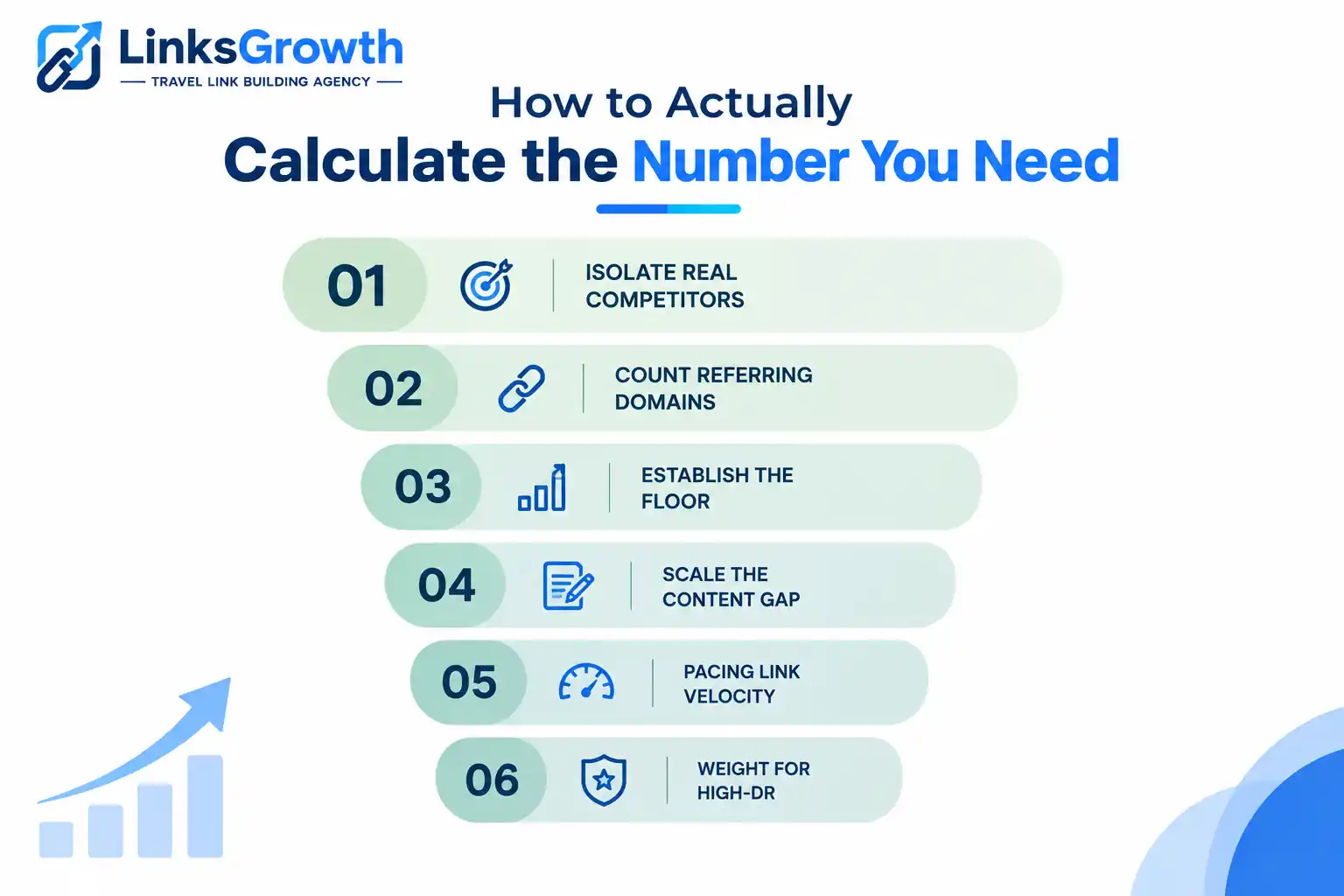
Rather than relying on an industry-wide average, here’s a practical framework for finding your specific number.
Step 1: Identify your real competitors — not your industry. Search your actual target keyword and identify the sites currently ranking in positions one through ten. These, not generic industry benchmarks, are your true comparison set.
Step 2: Measure their referring domains, not total backlinks. Using an SEO tool, record the number of unique referring domains for each of the top-ranking pages (not just their homepages — the specific ranking page matters more). Referring domain count, as the research above shows, correlates more reliably with rankings than raw backlink totals.
Step 3: Find your competitive floor. Identify the lowest referring domain count among the pages currently ranking on page one for your target keyword. This is your realistic minimum — the point below which you’re not yet competitive, regardless of content quality.
Step 4: Account for content and domain quality gaps separately. If your content is measurably more comprehensive, current, or useful than the current top-ranking page, you may be able to close some of the backlink gap through content quality alone — this is consistent with Google’s own emphasis on quality over pure link volume. But this rarely closes a large gap entirely on its own, particularly in competitive niches.
Step 5: Factor in link velocity, not just current totals. If competitors are actively adding new referring domains at pace, a static target based on today’s numbers will already be outdated by the time you reach it. Build a sustained acquisition rate into your plan, not a one-time push to a fixed number.
Step 6: Weight quality over volume in execution. Given the research showing a single high-authority link can outweigh a dozen weaker ones, prioritise fewer, better placements over a larger number of mediocre ones — especially early in a campaign, when a handful of genuinely strong links can establish trust signals that make subsequent link acquisition easier.
Given that quality outweighs quantity so consistently in the research above, it helps to have a fast, practical way to judge whether a given link opportunity is genuinely worth pursuing, rather than just adding to a raw count. Before treating any backlink as progress toward your target, it’s worth checking it against a few consistent criteria:
A backlink profile built consistently against these criteria will typically need fewer total links to achieve the same ranking outcome as a larger, less carefully vetted one which loops back to the central finding across every study referenced in this guide: it was never really about the number.
“How many backlinks do I need to rank” doesn’t have a single answer, and every genuinely reliable data source — from Google’s own John Mueller to large-scale 2025 and 2026 industry studies — points toward the same conclusion: the specific number depends entirely on your competition, your niche, and the quality of what you’re building it against. A blog in a low-competition niche might need a few dozen genuinely relevant links. A national finance brand might need thousands.
What doesn’t vary by industry is the underlying principle. Chasing an arbitrary number through shortcuts consistently fails, because Google was never actually counting links in the first place it’s evaluating whether the links reflect genuine relevance and trust. The real question isn’t how many backlinks you need. It’s how many genuinely relevant, high-authority sites can be convinced your content deserves a mention and that number, unlike an industry average, is one worth actually working toward.
It depends entirely on competition. For a low-competition, long-tail keyword in a lightly contested niche, 50 genuinely relevant referring domains can be more than enough. For a competitive commercial keyword in finance, legal, or another high-value vertical, 50 would likely place a site well below the competitive floor, where the median for page-one rankings can run into the thousands.
No. Internal links serve a genuinely useful purpose for site structure and crawlability, but they don’t function as external trust signals the way backlinks from other domains do. The referring domain counts and studies referenced throughout this guide refer specifically to external, third-party links.
There’s no fixed threshold, but new sites typically need to establish at least a small base of genuinely relevant, trustworthy links before competing meaningfully for anything beyond the lowest-competition long-tail terms. Realistically, this means prioritising a handful of high-quality placements over the first few months rather than aiming for volume immediately.
Yes, in two directions. As your own site accumulates authority and trust, you may need proportionally fewer new links to maintain or improve rankings. But as competitors also continue building their own link profiles — link velocity — the competitive floor for a given keyword tends to rise over time, meaning standing still is rarely enough.
It’s technically possible, particularly for extremely low-competition, highly specific long-tail queries where few or no other pages have targeted the exact same intent. But for anything with meaningful competition, the research consistently shows a real relationship between referring domains and ranking position — 94% of pages ranking in the #1 position have at least one external backlink, according to large-scale analysis of top-ranking results.
Did you find this article useful?